

 23 CIO Events to Attend in 2026
IT
7 AI Use Cases Every CIO Should Prioritize
CIOs are focused on AI applications that improve productivity, reduce costs, and boost other business outcomes. To help them select the best opportunities to extract value from AI, we've gathered the top seven AI use cases CIOs will implement this year.

Welcome to the “CIO’s Guide to AI” article series. This is the second post in the series. If you missed the first article, go back and read Why Most AI Projects Are Failing and How to Launch Successful AI Projects.
In 2026, CEOs are no longer asking CIOs “What’s our AI strategy?”. Rather, they’re asking “What’s our return on investment in AI?”. With 57% of CIOs facing pressure to improve productivity and 52% to reduce costs, they must shift their focus from tech deployment to business outcomes.
To do this, CIOs must select the right business cases to extract value from enterprise AI applications. These use cases should be smooth to implement and easy to measure results. Concretely, this means using AI to increase productivity, improve the customer experience, and accelerate business growth.
Let’s take a look at the seven best AI use cases every CIO should implement this year.
1. AI-Powered Self-Service Support
Strategic objective: Reduce ticket volume while improving customer satisfaction.
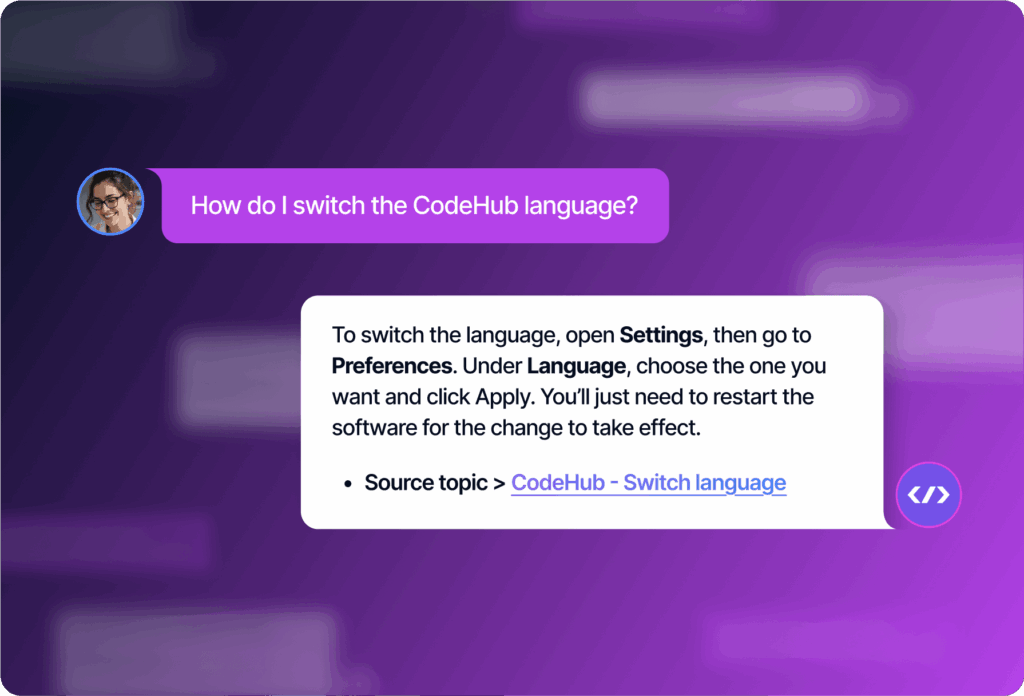
When users have a question or a problem, they expect instant support and results. To tackle this, companies are using chatbots that enable users to solve issues autonomously. AI chatbots and virtual assistants are among the most mature and impactful applications of AI. When powered by large language models (LLMs) combined with retrieval-augmented generation (RAG), these systems can deliver precise, context-aware answers drawn directly from validated enterprise product knowledge. They also offer continuous back-and-forth support to refine and clarify answers.
For CIOs, this represents an opportunity to enhance the customer experience while reducing support costs. Modern AI models can handle complex inquiries and escalate when human intervention is required. These systems operate 24/7, provide multilingual support, and continuously improve. The result is lower ticket volumes and improved resolution times.
Benefits:
- Increased user autonomy: Users can resolve issues without needing to open a support ticket or speak to a human agent.
- Higher customer satisfaction: Teams increase user satisfaction through timely, accurate support available 24/7 around the world.
- Reduced support costs: Self-service lowers ticket volumes and optimizes resources. Each ticket deflected reduces the support team’s costs.
This is often one of the fastest AI ROI use cases to implement enterprise-wide.
2. Augmented Support Agents
Strategic objective: Increase agent productivity and improve SLA performance.
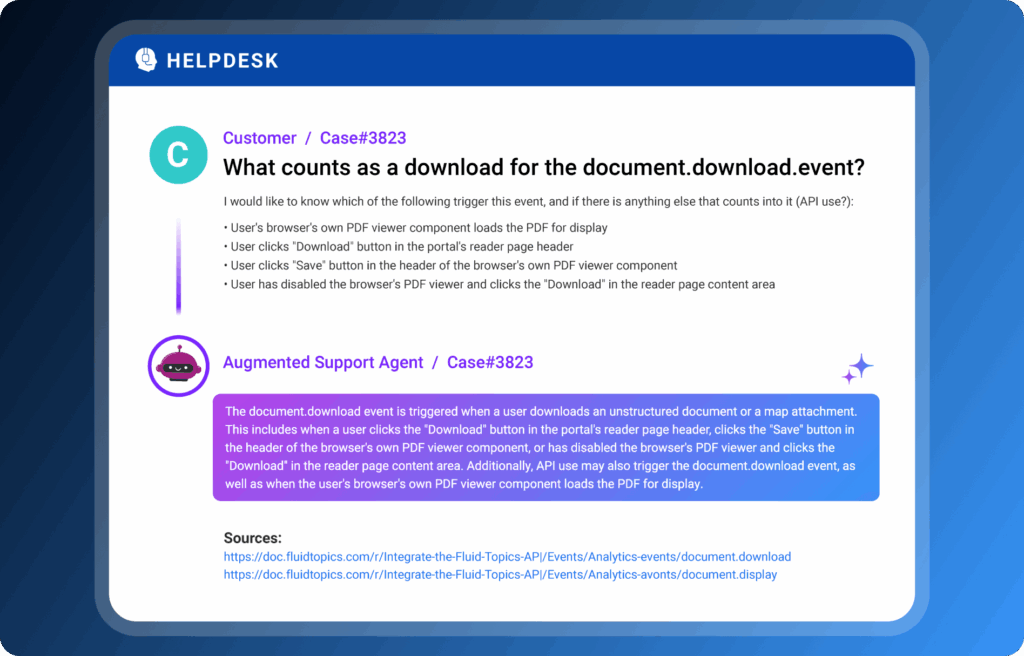
Customer support teams are often overwhelmed by a constant stream of service tickets. AI copilots embedded within helpdesk platforms draft accurate, context-aware responses based on trusted internal documentation. The support agent can then review, adjust, approve, and send the response, saving time while maintaining support quality.
Alternatively, companies can use Agentic AI to set up this business case. In an agentic system, AI agents take on a larger role. They can sort the tickets, handle straightforward issues automatically, access internal documentation and code repositories for information, draft answers to each query, schedule onsite maintenance if necessary, and send the customer a personalized reply. Both approaches expedite issue resolution and reduce ticket volume, optimizing employee workloads.
Benefits:
- Shortened case resolution time: Simple issues get near-instant replies. This cuts resolution times to a fraction of what they were before using AI. Meanwhile, support agents have more time to work on complex customer issues. This focus helps them get to the bottom of tricky tickets even faster.
- Better agent decision support: AI tools with predictability models suggest the next best reply for each ticket. This simplifies the work of support agents and makes excellent customer support frictionless.
- Improved SLAs: Faster support responses minimize downtime and solve connectivity issues, ensuring teams meet or exceed SLAs.
For CIOs, this translates directly into operational efficiency and measurable service improvements.
3. RFI and RFP Responses & Commercial Proposals
Strategic objective: Accelerate revenue generation and improve win rates.
Responding to RFPs and RFIs (Requests for Proposal and Requests for Information, respectively) has long been one of the most repetitive and resource-intensive tasks for enterprise sales and proposal teams. While each questionnaire may appear unique, most contain recurring questions that reference information that already exists. However, it is often buried in previous submissions, product documentation, and other company content.
AI agents can streamline the entire RFP process by extracting relevant answers from past submissions, aligning them with current product documentation, drafting complete responses, identifying compliance gaps, and preparing finalized submissions with human oversight.
The result is a faster, smarter, and more scalable RFP process that lets sales teams invest their time where it matters most: engaging high-potential prospects and closing deals.
Benefits:
- Stronger win rates: With AI handling long, detailed questionnaires, salespeople have more time to focus on converting prospective clients. In parallel, AI agents answer more tenders, each with accurate, detailed answers. This leads to more tenders potentially won for the company, meaning double the wins.
- Faster employee ramp-up: Historically, teams had to search past RFPs and ask senior teammates where to find the right answers. AI accelerates employee ramp-up by compressing the time it takes for new hires to gain context, confidence, and consistency in responding to key company questions. This also helps them learn which nuances matter to which buyers.
- Higher employee satisfaction: Teams can take repetitive tasks off their to-do lists and focus on interesting, meaningful missions.
For revenue-driven CIOs, this is one of the clearest AI use cases tied directly to top-line growth.
4. SDR Agent for Sales Prospecting
Strategic objective: Increase pipeline velocity and revenue per rep.
Sales prospecting is a long and tedious cycle, requiring repetitive emails and frequent follow-ups. AI agents can manage prospection pipelines to automate SDR outreach. A simple CRM status update to “follow up” can trigger the AI agent to gather a prospective client’s information, email history, and company details. The agent uses this information to prepare and send personalized messages. It then updates the CRM and schedules meetings in the Sales Executive’s calendar when it receives positive replies.
This is a strong AI business case as it has a direct impact on a company’s revenue. By automating sales outreach, AI agents allow sales teams to engage far more prospects in the same timeframe, increasing pipeline velocity and potential revenue. Furthermore, the agents continuously analyze response patterns, including open rates, click rates, and replies. These metrics help the system optimize subsequent messages to maximize engagement and conversion.
Benefits:
- Increased team efficiency: Employees focus on high-value tasks, joining the sales process once prospective clients show interest.
- Deeper lead personalization: Agents use client details to customize messages to each person’s industry, role, etc. This is highly time-consuming when done manually and leads to stronger opening and response rates.
- Shorter response cycles: Crafting hundreds of personalized emails a week takes time. AI agents accelerate the process, answering questions and sending messages related to each prospect’s needs and business with minimal delays. This, in turn, makes prospective customers feel valued.
For CIOs focused on measurable AI ROI, revenue-linked automation is particularly compelling.
5. Employee Onboarding
Strategic objective: Accelerate time-to-productivity for new hires.
When new employees struggle to find information, they waste time. This includes both their own time from endless searches, as well as that of senior colleagues through interruptions.
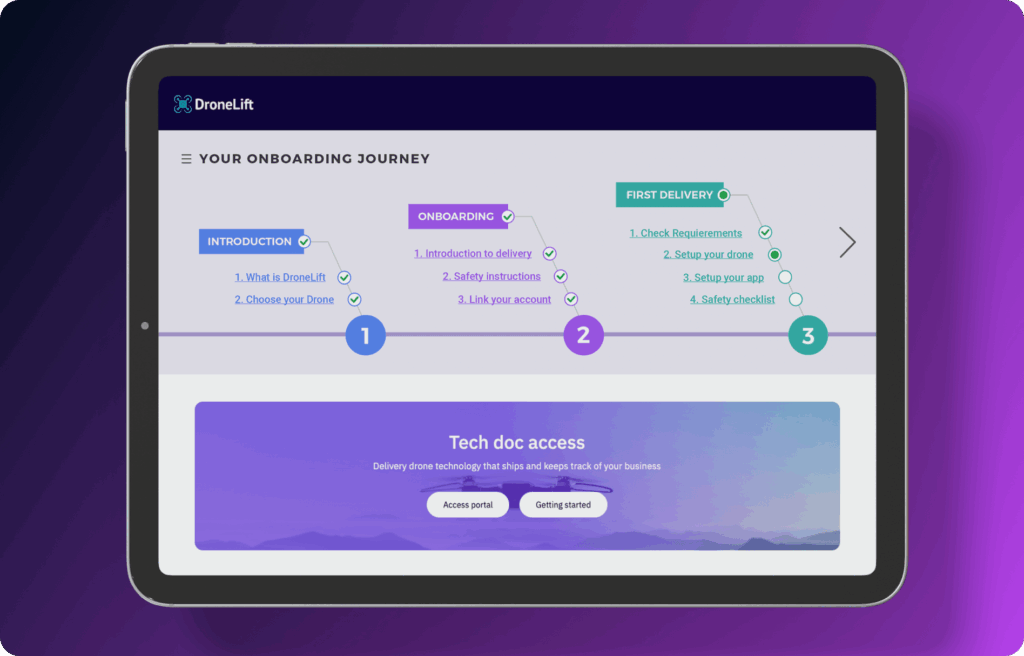
AI agents personalize onboarding workflows with user preferences and profiles, including elements like language, role, seniority, and business unit.
By delivering targeted training materials, tools, and resources, AI-supported onboarding accelerates the learning curve. This helps employees quickly move from novice to expert, increasing product understanding and fostering autonomy along the way.
Benefits:
- Accelerated new hire ramp-up time: New employees find the information they need quickly without interrupting colleagues.
- Enhanced employee autonomy: New hires quickly and confidently become competent with personalized information. This means employees are more productive and working towards company goals faster.
- Better knowledge access: Employees get tailored access to key information right from the start.
This improves their company and product knowledge. In high-growth environments, this use case directly impacts operational scalability.
6. Product Innovation R&D
Strategic objective: Shorten time-to-market and reduce design risk.
Product engineers face increasingly short product development cycles, creating pressure for new versions and feature updates. AI-enabled computer-aided design (CAD) tools help meet these demands by analyzing designs, identifying optimization opportunities, and generating new designs based on their precise product parameters and user needs. By reducing complexity and providing guidance, these solutions make designers and engineers more efficient throughout their workflows.
Championing this use case reduces costly design errors, fosters creativity in engineering teams, and helps new products move from design to development faster.
Benefits:
- Faster time-to-market: These tools streamline R&D processes to quickly produce plans for production-ready models and products.
- Optimized decision making: Engineers receive real-time guidance and suggestions to optimize and simplify their models.
- Enhanced engineer productivity: Engineers save time on tedious tasks to focus on high-impact work.
In industries with compressed product lifecycles, this can materially impact market share.
7. Coding Copilots for Software Development
Strategic objective: Increase developer productivity and code quality.
Product engineers typically spend a majority of their time writing, reviewing, and editing code. Now, AI copilots easily integrate into developer tools to help engineers automate or optimize code. These systems adapt to each developer’s unique style and follow custom guidelines to generate tailored outputs.
For CIOs, this use case offers the opportunity to accelerate software development workflows by increasing code production, proposing edits, optimizing quality, creating pull requests, and validating files. This extends technical capabilities and improves workflow efficiency, giving developers the bandwidth to drive innovation across projects.
Benefits:
- Faster release cycles: Each workflow step (e.g., code creation, editing, validation) is shortened. This accelerates sprints, leading to faster production-ready product updates.
- Increased code quality: Live quality checks suggest code improvements in real time as developers write it. Fixing issues early means fewer revisions and delays later on.
- Improved vulnerability detection: Coding copilots run vulnerability checks to flag weaknesses before code is pushed to production.
For CIOs managing digital platforms or internal application development, this is a high-leverage AI investment.
How CIOs Should Prioritize AI Use Cases
CIOs who focus on impactful, feasible business cases will reap the rewards. These seven use cases will reimagine core processes, improving competitiveness, scalability, and operational performance. To go further, CIOs can look for other high-priority opportunities using the following criteria:
- Workflows that create bottlenecks;
- Processes that rely on repetitive and error-prone human tasks, like searching, copying, or writing;
- Activities that hamper quality, costs, maintainability, or productivity.
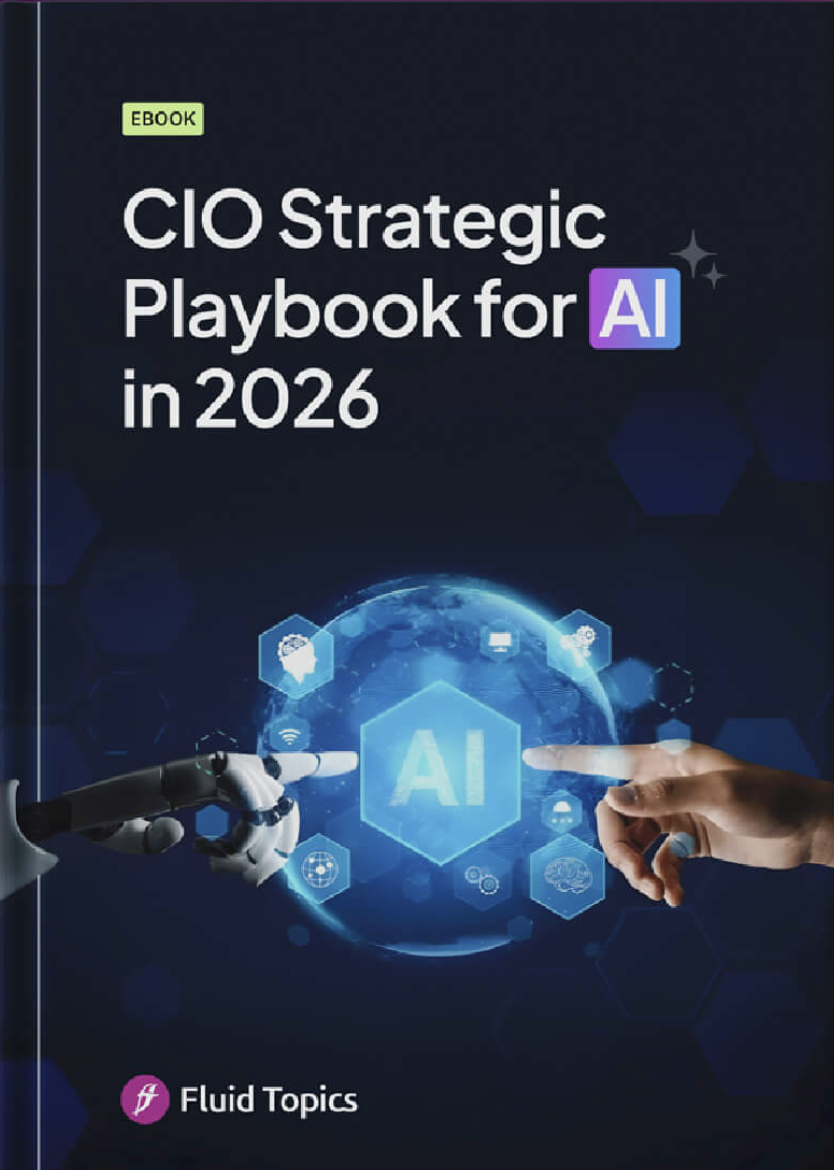
CIOs looking for additional information on launching successful AI projects can access our Strategic Playbook for AI in 2026. There, they’ll discover the latest AI advancements, why AI projects fail, how the role of CIOs is changing, how Agentic AI is shifting strategies, and so much more.
FAQs
Not necessarily. Many enterprises have invested heavily in data lakes. However, most data lakes have turned to data swamps due to the lack of consideration for managing governance and maintaining real-time data syncing. These issues make most data lakes inefficient for AI systems. Modern AI architectures increasingly rely on structured, trusted knowledge sources combined with real-time retrieval mechanisms rather than large-scale data dumping.
23 CIO Events to Attend in 2026

 Why 60% of AI Projects Will Fail This Year (& How CIOs Can Beat the Odds)