
 How to Bring the AI Search Experience to Your Knowledge Ecosystem
AI
AI Answer Engines: What Do Documentation Teams Need to Know?
AI answer engines are powerful search tools that respond to user queries with natural language responses. Discover how they work and why they're important for documentation teams.

Welcome to “GEO for Documentation Teams,” an article series where we break down how modern documentation portals are upgrading user content experiences with advanced AI capabilities. This is the second post in the series. Don’t miss our other articles on why docs teams need a GEO strategy, GEO vs SEO, the benefits and challenges of GEO, how to prepare GEO-friendly content, and how to measure results.
Key insights
- AI answer engines look at queries, determine intent, and deliver responses in the form of clear, concise summaries. The replies often include citations and links for verification.
- AI answer engines like content that is detailed, structured, and recently published. Third-party mentions help.
- Each answer engine has its own algorithm, meaning each one prefers different types of content sources. These algorithms may change rapidly.
Regardless of the company you work for, the position you hold, or the industry you’re in, you’ve probably heard of and used tools like ChatGPT, Claude, Perplexity, and Gemini. ChatGPT alone reports over 700 million weekly active users.
These solutions, also called AI answer engines, are powerful search tools that use natural language processing, machine learning, and large language models to analyze user queries and respond with personalized, relevant results.
Understanding how these tools work is the first step in implementing a Generative Engine Optimization (GEO) strategy. Read on to learn how they understand information, the types of content they select as references for their responses, and the ways that different solutions differ.
How Do AI Answer Engines Work?
When you ask an AI answer engine a question, it first identifies what you are trying to ask. This is the intent. Then, it either references its internal training data or runs a real-time web search to pull details from reliable sources and turns them into clear, concise summaries. The final response is typically easy to follow and written in a natural, conversational tone. These tools also include some citations with links to original sources, so you can verify the claims and dig deeper. Ahrefs found that ChatGPT references about 50% of the URLs it retrieved in its responses.
For users, this process is effortless in comparison to traditional search models. For technical writers, it raises new challenges that traditional SEO never addressed:
- Where does the engine get its information from?
- What signals make a documentation page trustworthy and credible enough to cite?
- If your docs are accurate but never show up in AI-generated answers, what should you change, and where do you start?
How Can Teams Get More AI Citations for Their Documentation?
Some companies report that content that ranks well in traditional search engines will also appear in responses from AI answer engines. This is certainly true to an extent, particularly for Google’s AI Overviews, which cite pages ranking in Google’s top 10 results 38% of the time. However, these engines also look beyond SEO results. In fact, 31% of pages cited by answer engines do not rank in Google at all.
So, what do writers need to know to get AI answer engines to cite their documentation? Here are five rules to keep in mind:
- Prioritize third-party mentions and reviews: AI trusts others’ opinions more than your own claims. Being referenced on G2 or in “best of” lists helps answer engines trust your product. Much of these efforts will be run by marketing teams, but documentation teams should still be aware of what is needed to improve cross-team communication.
- Be specific: Include clear answers to focused questions in your documentation. The question-answer format reflects the way users submit queries, and answer engines respond. Therefore, reflecting this format helps answer engines understand and reference your documentation.
- Structure for machines: Granular, organized content is easier for AI to extract and reference. Implementing best practices for AI-friendly content is essential for making sure AI can understand and use relevant product knowledge.
- Keep knowledge current: Recently published documentation is cited more often by AI systems. Keep information up to date, and do not forget to update the publish date when you do. This signals to answer engines that the information is fresh.
- Track your results: Measure GEO mentions and citations or AI traffic to track ROI and business results. Then, continue to make documentation improvements that improve visibility.
How Does Each AI Answer Engine Differ?
Platform differences matter as every AI answer engine uses its own algorithm. As a result, each one tends to pull content from certain sources. Many AI answer engines often rely on Reddit threads, Wikipedia articles, LinkedIn posts, and G2 reviews when generating responses. In contrast, AI Overviews typically follow Google’s ranking systems and cite top-performing pages. When you know which platforms your audience uses, you can focus your GEO efforts where they will have the biggest impact first.
Conclusion
While AI answer engines give users fast, helpful responses, they also create new challenges for documentation portal owners and technical writers. These tools operate like black boxes and evolve quickly, making it harder to predict when and how information about your brand and products will appear.
Continue the journey in our GEO for documentation teams series with the article “GEO vs. SEO: Why Documentation Teams Need Both”.
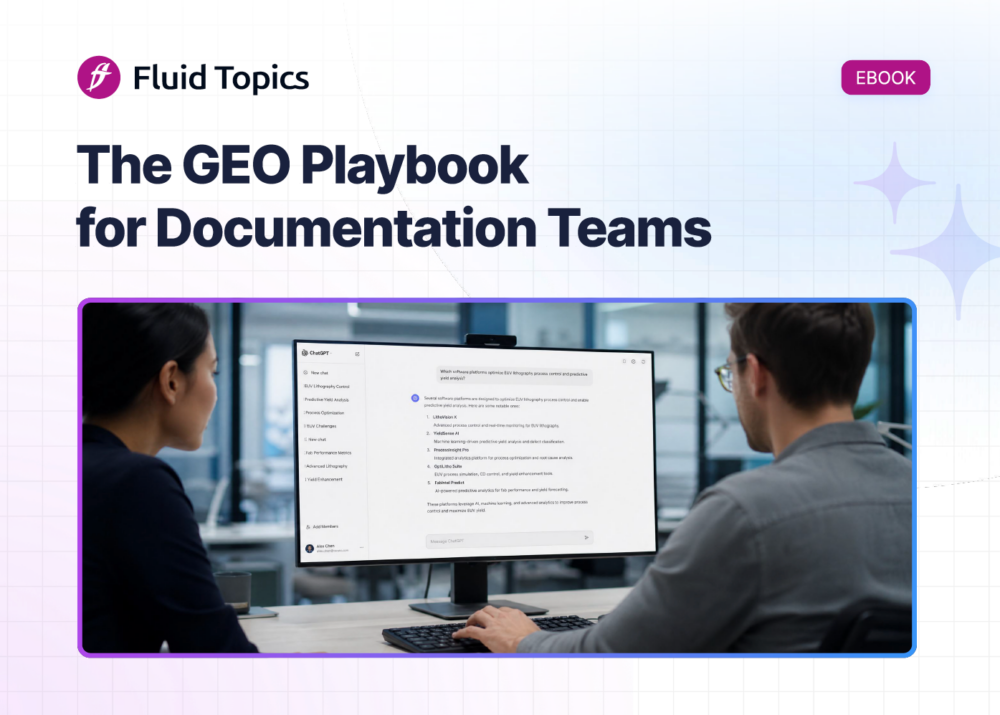
GEO Playbook for Documentation Teams
Learn how to get AI answer engines to find, understand, and use your documentation in their responses to user questions.
AI Answer Engine FAQ
SEO focuses on adjusting content to better rank on search engine results pages. AEO and GEO are used as interchangeable terms. Specifically, AEO focuses on optimizing content for featured snippets, knowledge panels, and other ‘no-click’ search features pioneered by Google. GEO refers to strategies that optimize content to appear as mentions or citations in AI answer engine responses.
How to Bring the AI Search Experience to Your Knowledge Ecosystem

 Top 11 AI Books to Read in 2026