

Content Ops
2 Common GEO Challenges (and How to Solve Them)
First, learn how GEO improves product discoverability, reduces support burden, and enhances information reliability. Then take a look at two core challenges documentation teams face when implementing GEO practices and how to solve them.

Table of Contents
- What are the Business Benefits of Generative Engine Optimization?
- 1. How Does GEO Improve Product Discoverability?
- 2. How Does GEO Reduce Support Burden?
- 3. How Does GEO Enhance Information Reliability?
- What Challenges Do Teams Face with GEO?
- 1. Evolving AI Algorithms Make Long-term GEO Strategies Outdated
- 2. Contradictory Practices with SEO
- Achieving Better Results with GEO
Welcome to “GEO for Documentation Teams,” an article series where we break down how modern documentation portals are upgrading user content experiences with advanced AI capabilities. Don’t miss our other articles on why docs teams need a GEO strategy, an intro to answer engines, the differences between SEO and GEO, how to prepare GEO-friendly content, and how to measure results.
Key insights
- GEO efforts for documentation lead to better product discoverability, less burden on support teams, and enhanced information reliability.
- Teams typically run into two primary challenges when looking to achieve good GEO results: ever-changing AI algorithms and competing interests with SEO strategies.
- AI answer engine algorithms are instable. In early 2025, Reddit saw a 450% increase in AI citations. Then, the citations dropped from 14.29% to 0.21% of all citations due to a licensing dispute with ChatGPT.
- FAQs are back and now serving two purposes. They help readers scan fast and also signal authority to AI engines.
With 60% of searches now ending without the user clicking through to any website, implementing a Generative Engine Optimization (GEO) strategy may not seem like anything more than an annoying requirement. However, GEO isn’t just a defensive move to keep pace with how search is changing. Done well, it delivers concrete business benefits across the customer lifecycle, from the first product search to post-purchase troubleshooting. Keep reading to discover the three most significant benefits of a comprehensive GEO strategy. Then discover two key GEO challenges and how to solve them.
What are the Business Benefits of Generative Engine Optimization?
Implementing GEO best practices for documentation leads to better product discoverability, less burden on support teams, and enhanced information reliability. Let’s look at each one in detail.
1. How Does GEO Improve Product Discoverability?
Quick answer: GEO increases the likelihood that AI answer engines recommend, mention, and cite your product in generated answers. When your content is easy for AI engines to understand, it becomes part of the answer.
Decision makers increasingly skip the search-and-browse model entirely when looking for the right business solution. Clicking through search results that may or may not be relevant to their queries takes too much time. Instead, they open an AI answer engine, describe their exact situation, and ask for a tailored recommendation.
Examples:
- “What’s the best documentation platform for a SaaS company with a distributed engineering team and a legacy Confluence setup?”
- “We need a developer portal that supports OpenAPI specs and has strong search. What do you recommend?”
When your documentation is structured so AI tools can read, interpret, and cite it, your product can show up in the recommended options. If it isn’t, the AI may rely on a competitor’s documentation instead.
The stakes are higher than traditional SEO. Before, falling behind might have meant ranking third instead of first. Now, it can mean not being considered at all. And if your product isn’t on the list, you’re out before the evaluation even begins.
Why Does Discoverability Matter for Narrative Control?
There’s a second reason that discoverability matters: narrative control. AI answer engines don’t limit themselves to official knowledge sources. Without optimized documentation, an engine answering a question about your product might draw from inaccurate third-party content instead. You can’t control AI’s output directly, but you can make your own content the most structured, accessible, and citable option available.
Companies that act quickly will start to see the benefits with users already shifting their approach to product discovery and purchasing. Semrush research found that 50% of consumers have made a purchase after using AI during research, and 69% of users expect AI to play a bigger role in how they shop in the future. At the same time, 47% of respondents use AI to narrow down options but then turn to Google for reviews or pricing, a reminder that AI and traditional search still work together in the buyer journey.
2. How Does GEO Reduce Support Burden?
Quick answer: GEO extends the reach of your documentation beyond your own channels, enabling AI assistants to deliver accurate troubleshooting guidance and helping support teams focus on more complex issues.
Discoverability gets a user through the door. But what happens after they become customers matters just as much, and that’s where GEO improves troubleshooting. When something breaks, users increasingly ask an AI tool for help before submitting a support ticket. Even though many companies now offer AI-powered chat and search in their documentation, many users still go first to AI answer engines for support.
Examples:
- “I’m getting a 403 error when calling the API with a valid token. What am I missing?”
- “How do I migrate from v2 to v3 without downtime?”
- “[Product] keeps timing out on large file uploads. Is there a config setting I need to change?”
If your documentation can be found by AI, is understandable to AI, and clearly answers any customer questions, then users get accurate help instantly. Good GEO extends documentation’s reach beyond the surfaces you directly control, your site, your portal, your in-product help, into every AI interface your users already turn to when they’re stuck. A user who gets an accurate answer from an AI tool at 11 p.m. never opens a ticket. They don’t know or care that the answer came from your docs; they just know their problem got solved.
That frictionless experience compounds: fewer tickets for issues your documentation already addresses, less load on support agents, and faster resolution for users who would otherwise wait in a queue. For teams already tasked with demonstrating the value of documentation investment, that’s a concrete, trackable outcome. It’s also a meaningful shift in customer expectations: Zendesk research found that 75% of consumers who have already used generative AI think it will change their customer service experience in the near future.
3. How Does GEO Enhance Information Reliability?
Quick answer: GEO improves information reliability by providing an authoritative source of product content that AI answer engines can easily find and use to deliver relevant, accurate information to users rather than rely on third-party information.
Discoverability and troubleshooting both depend on the same underlying condition: AI has to be pulling from your content, not someone else’s version of it. When users ask about your product, the answer engine sources information from whatever content is relevant, available, and extractable. That may mean:
- A G2 review from a user who had a bad implementation experience
- A Reddit thread from three product releases ago
- A LinkedIn post summarizing technical content gets key details wrong
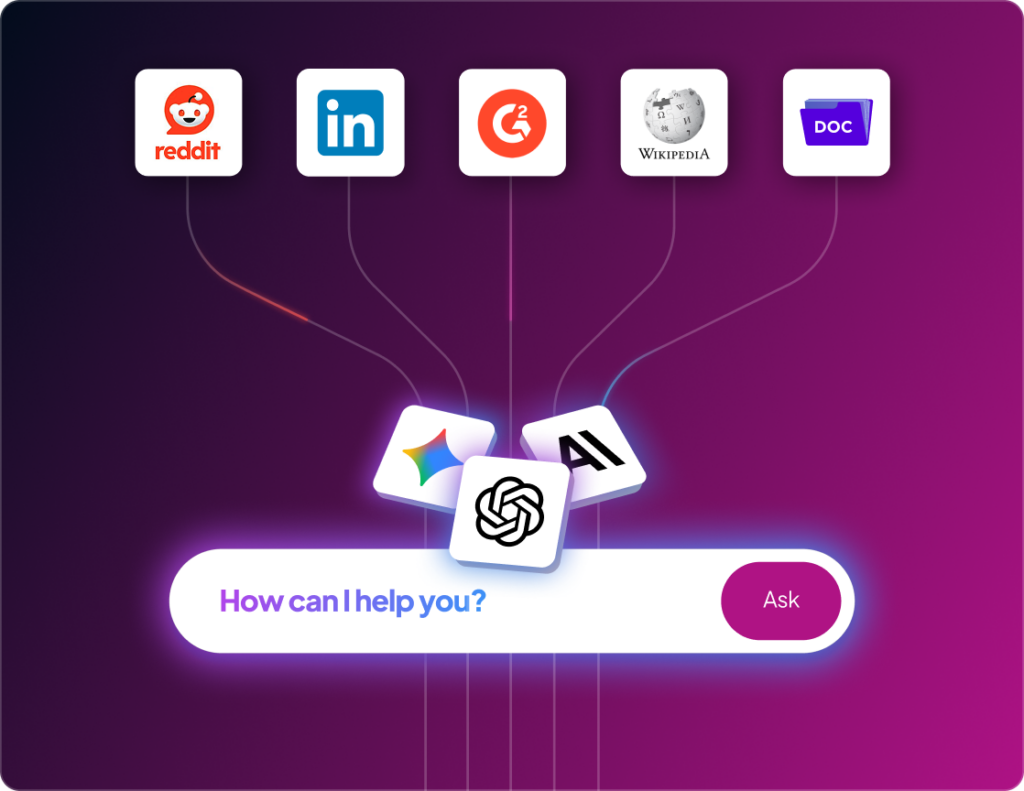
Technical writers already own the content that should be appearing here, including accurate API references, versioned release notes, and scoped troubleshooting guides. AI engines favor content that’s logically structured, uses consistent terminology, and answers specific questions directly, which is exactly what good technical documentation already does. GEO is largely about making sure the work your team is already doing gets recognized as the authoritative source it is.
The upside is measurable. Research published on Arxiv found a 40% average increase in visibility within generative engine responses after teams implemented GEO methods.
What Challenges Do Teams Face with GEO?
Teams typically run into two primary challenges when looking to achieve good GEO results: ever-changing AI algorithms and competing interests with SEO strategies.
1. Evolving AI Algorithms Make Long-term GEO Strategies Outdated
GEO is new and still evolving, which means it lacks a stable foundation, making strategic implementation more challenging. The discipline of GEO grew alongside the commercial launch of AI answer engines, so most optimization tactics are still being figured out and adjusted in real time. There’s no proven playbook, just testing and learning. Plus, the systems that would confirm best practices are constantly changing.
The Rise and Fall of Reddit Citations
The Reddit situation offers the most vivid example of this challenge. After months of Reddit rising as a frequently cited source in ChatGPT responses, its citations abruptly plunged by 95% within a single month because of a licensing disagreement with OpenAI, which set off a sudden algorithmic downgrade. Importantly, Reddit’s citation levels on competing products such as Perplexity stayed steady, showing the change was driven by contracts and ranking mechanics, not any decline in content quality.
Timeline
- March to June 2025: Reddit saw a 450% increase in AI citations (Digital Bloom)
- Early August 2025: Reddit citations peaked at 14.29% of all cited sources (Spotlight)
- Mid-September 2025: Reddit citations dropped to 0.21%—essentially near-zero (Spotlight)
As AI-driven answer engines expand and mature, they may—and often will—modify their algorithms, whether from deploying new large language models, striking business partnerships, or rolling out routine updates. Even minor tweaks can trigger major changes in which information sources get prioritized or suddenly ignored, wiping out months of optimization effort overnight. With targets that keep shifting, it becomes difficult, if not nearly impossible, for documentation teams to execute a straightforward and consistent strategy.
The key is to implement writing practices that help AI find and understand your documentation. Then, track the results of your GEO efforts and make changes as necessary to improve outcomes.
2. Contradictory Practices with SEO
SEO and GEO can work together, but they don’t always move in the same direction. For example, traditional SEO keyword planning doesn’t always translate neatly to the way people phrase prompts for AI tools. That gap can force tradeoffs between documentation title choices and other editorial decisions.
In the same way, SEO tends to favor long-term consistency by avoiding frequent edits and focusing on evergreen pages that can rank for years. Meaningful updates with new information can improve SEO results, but in general, too many updates without real substantive changes may lead to SEO penalties. GEO, however, prioritizes timely, updated information. AI answer engines frequently replace references with links that are new or freshly updated, which may encourage writers to integrate ongoing changes to documentation. This, however, may undermine steady SEO performance.
Ultimately, GEO encourages technical writers to think about emerging AI audiences and the ways they discover, consume, and interpret content. Still, you shouldn’t get so caught up in optimizing for AI that you neglect engaging and helping your human readers. The experience should feel seamless for both groups—AI and people—rather than prioritizing one over the other.
Why FAQs Matter More Than They Used To
One practical illustration of where GEO and SEO diverge in execution: FAQ sections. For years, a heavy FAQ page was treated as a sign that your information architecture wasn’t doing its job properly. That has now changed.
The Q&A format mirrors exactly how users prompt AI systems: a question followed by a direct answer. A well-structured FAQ gives AI tools a clean match to extract and cite, while narrative prose burying the same information is much harder to surface. A targeted FAQ section now serves double duty, helping human readers scan and giving AI engines a reliable signal of authority.
Achieving Better Results with GEO
Each of the aforementioned benefits points to the same principle: AI will answer product questions whether or not you participate. Documentation teams only choose whether that answer can be found in accurate, current, well-structured content they control. If not, AI will gather information from whatever third-party source happens to be easiest for it to extract. By addressing common GEO challenges and using documentation best practices, teams can gain these benefits.
Continue the journey in our GEO for documentation teams series with the article “How to Write and Publish Documentation That Boosts GEO”.
GEO Playbook for Documentation Teams
Learn how to get AI answer engines to find, understand, and use your documentation in their responses to user questions.
GEO Impact FAQ
Yes, AI answer engines can only cite content they can access and crawl. Therefore, documentation that isn’t publicly indexed and that is hidden behind a login wall won’t benefit from GEO efforts.

 7 Business Benefits of AI in Documentation Portals